 Est. 2003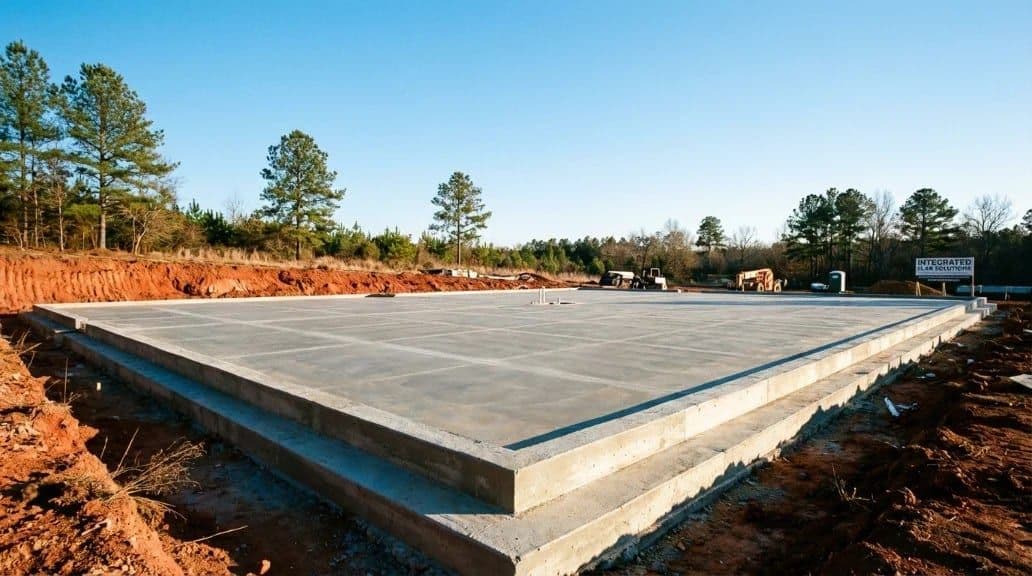
Slab and footing, one pour.
A monolithic pour combines the floor slab and the perimeter footing into a single placement, no cold joints, no separate pours, and a faster schedule. Thickened edges carry the load.
Monolithic slab foundations
Fewer joints, faster schedule.
A monolithic foundation places the slab and the perimeter footing in one shot. We thicken the edges around the perimeter and at load points to carry the structural weight, all formed and poured together.
It’s a strong, efficient method for single-story commercial buildings, shops and warehouses on stable soil where conditions allow it.
Why monolithic
One pour, done right.
Single Placement
Slab and footing in one pour, no cold joint between them.
Thickened Edges
Deepened perimeter and load points carry the structure.
Faster Schedule
One pour instead of two keeps the timeline tight.
Grade Beams
Integrated grade beams where the loads call for them.
How it goes
Form to finish.
Scope & Bid
Confirm soil suits a monolithic pour, review the plan, bid it.
Grade & Form
Pad prep, perimeter and load-point forming, edge thickening.
Reinforce
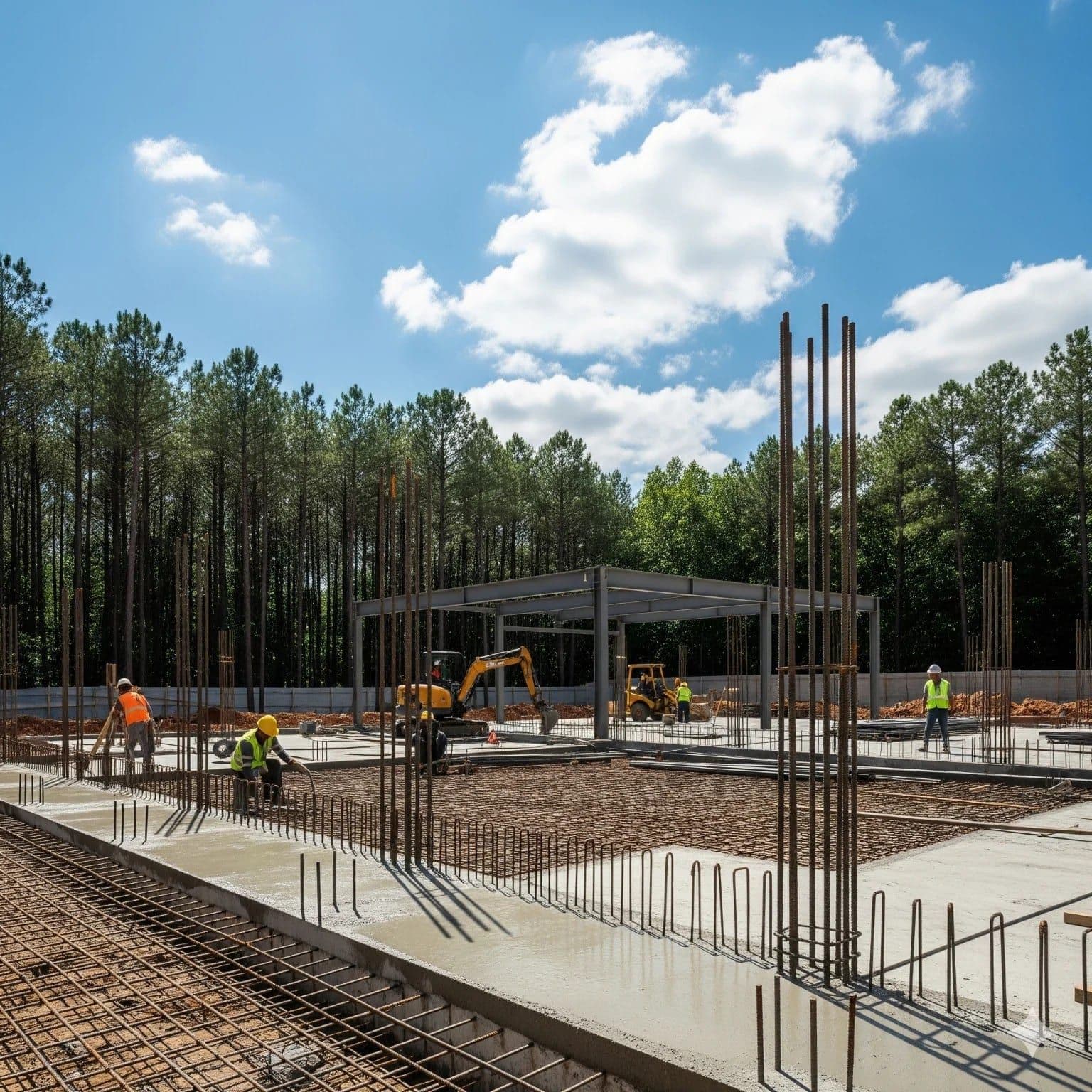
Rebar through the thickened edges and mesh across the slab.
Single Pour
Slab and footing placed and finished in one continuous pour.
Good questions
Monolithic FAQ.
When is a monolithic slab the right call?+
It works best for single-story buildings on stable soil, shops, warehouses, pads. On poor soil or multi-story loads, a separate footing and stem wall may be the better answer. We’ll tell you which fits.
Is it cheaper than a stem-wall foundation?+
Often, yes, one pour means less forming, less labor and a faster schedule. The savings depend on the soil and the structure.
How thick are the edges?+
The thickened edge is engineered to the load, typically wider and deeper than the slab field. We pour to the spec your engineer sets.
Related scope
Often handled together.
Building a pad or shop?
Send the plan for a bid.
Tell us the footprint, loads and soil and we’ll come back with numbers and a schedule.