 Est. 2003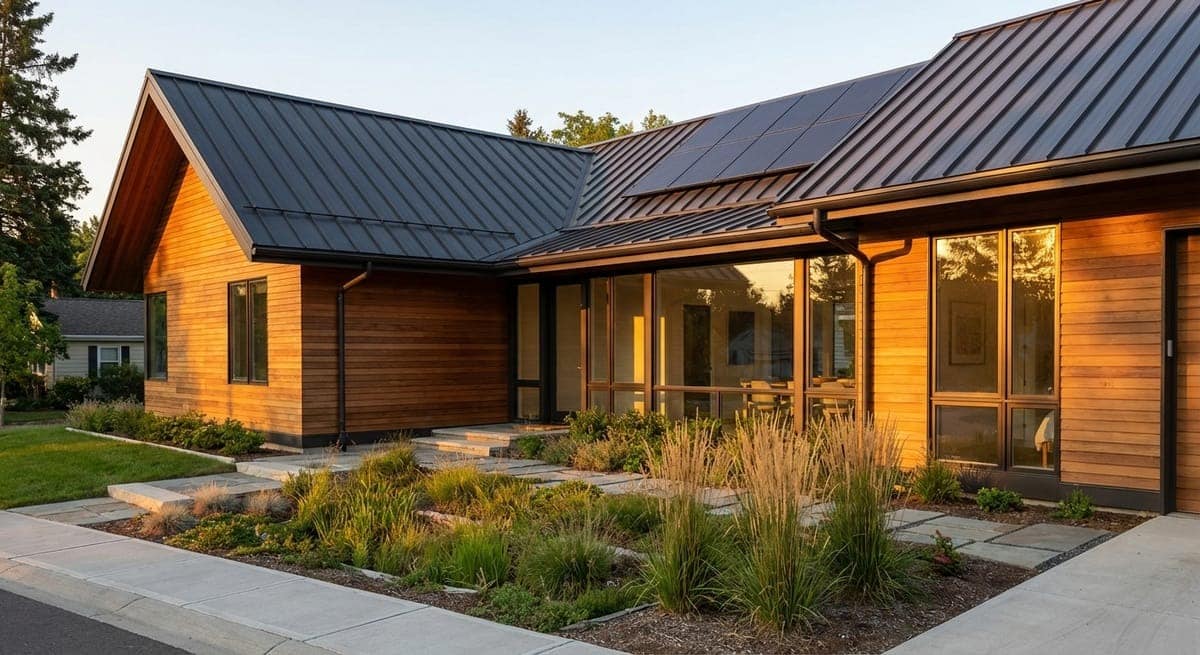
Sustainable building materials for Metro Atlanta homes include bamboo flooring, recycled metal roofing, cork, cellulose insulation, and low-VOC paints. These eco-friendly options handle Georgia’s humidity while delivering energy savings, improved air quality, and increased home values with minimal cost premiums over traditional materials.
Choosing sustainable materials for your Metro Atlanta remodel means balancing environmental responsibility with practical performance in Georgia’s humid subtropical climate. Homeowners in Woodstock, Canton, Marietta, and surrounding communities face unique challenges, from termite resistance to humidity control, that make eco-friendly material selection critical for long-term success.
Why Metro Atlanta homeowners choose sustainable materials
Long-term savings: metal roofing reflects heat and lasts 50+ years versus asphalt’s 15–20, cutting cooling costs. Health benefits: low-VOC paints eliminate toxic off-gassing, and natural materials like cork and bamboo resist mold in 60%+ summer humidity. Home value: buyers in Alpharetta, Roswell, and East Cobb actively seek sustainable features that command premium resale.
Best sustainable materials for Atlanta’s climate
| Material | Lifespan | Climate benefit | Maintenance |
|---|---|---|---|
| Bamboo flooring | 25–50 years | Moisture-resistant, harder than oak | Re-seal every 5–7 years |
| Cork flooring | 20–30 years | Antimicrobial, natural insulation | Seal every 3–5 years |
| Recycled steel roofing | 50–70 years | Reflects heat, reduces cooling 10–25% | Minimal, periodic inspection |
| Reclaimed wood | 50+ years | Termite-treated, unique character | Standard wood care |
| Cellulose insulation | 20–30 years | Moisture-regulating, R-3.5/inch | None after installation |
| Recycled glass countertops | 30+ years | Heat/scratch resistant | Seal every 2–3 years |
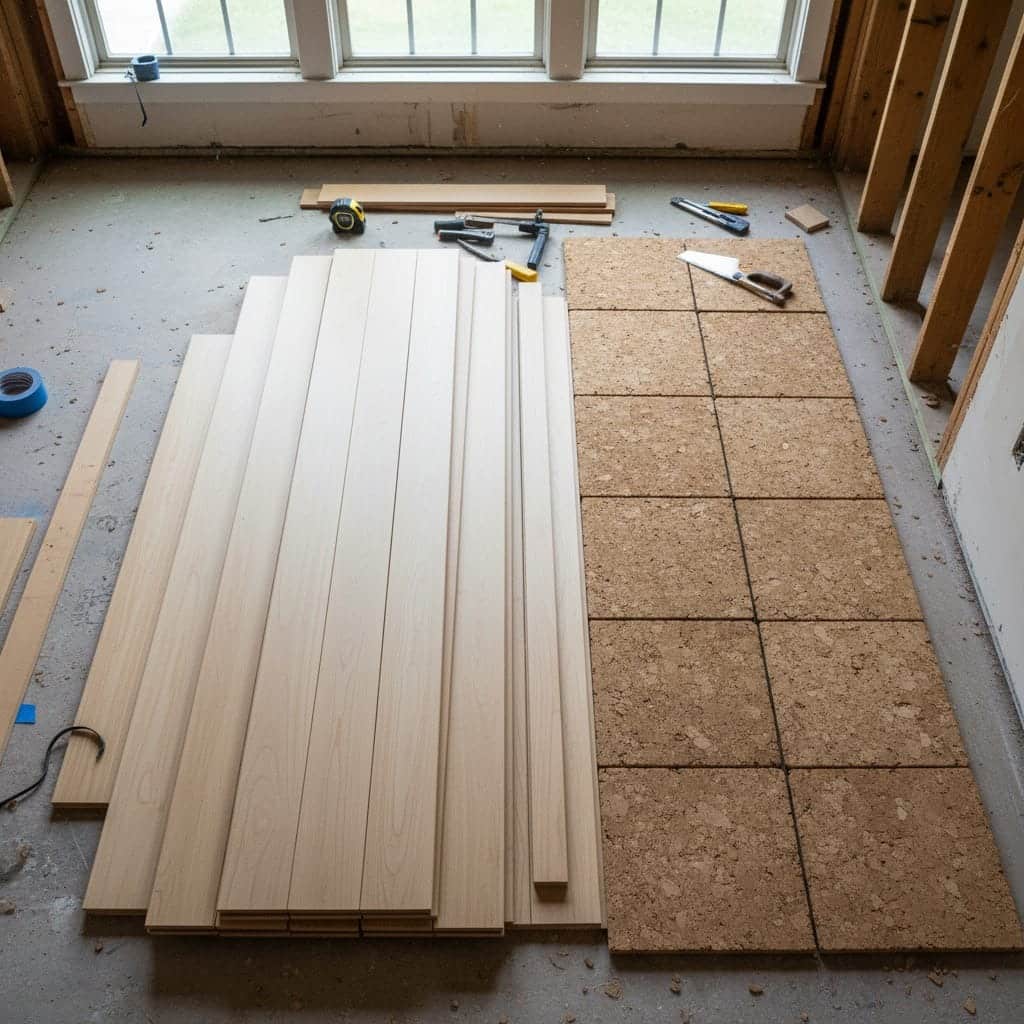
Bamboo and cork resist humidity when sealed (bamboo’s 1,300–1,400 Janka rating exceeds many hardwoods); cork’s antimicrobial cellular structure suits bathrooms and basements. Reclaimed wood brings character, but always inspect for termite damage and verify kiln treatment (160°F for 24+ hours). Metal roofing is termite-proof, fire-resistant, Class 4 impact-rated, and wind-resistant over 140 mph. Low-VOC paints (Benjamin Moore Natura, Sherwin-Williams Harmony, Behr Premium Plus Zero) contain <5 g/L VOCs versus 50–200 in traditional paint.
What sustainable materials really cost
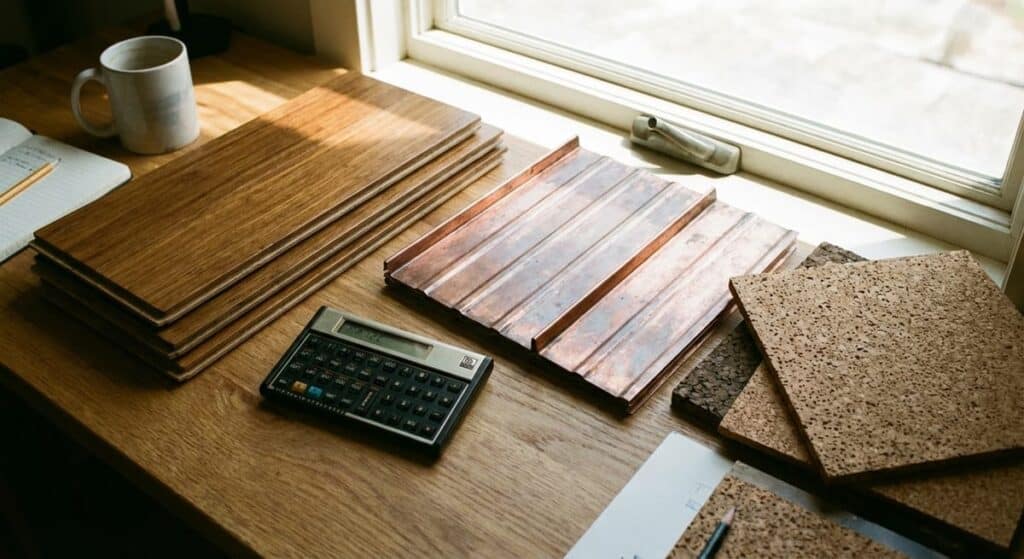
Sustainable materials cost slightly more upfront but deliver savings through lower energy bills and reduced maintenance. Bamboo flooring is comparable to traditional hardwood; cork prices below it. Metal roofing requires higher upfront investment but lasts three times longer, with 15–20% summer cooling reductions. Recycled glass countertops align with mid-range granite pricing while offering superior heat resistance.
ROI: Georgia Power offers rebates for insulation and energy-efficient appliances; federal tax credits return percentages on solar. Metal roofing’s extended lifespan creates neutral lifecycle costs accounting for multiple shingle replacements, plus insurance discounts for impact/fire resistance. Moisture-resistant basement materials prevent costly future mold remediation.
Choosing the right materials by room
| Room | Recommended products | Key considerations |
|---|---|---|
| Kitchen | Bamboo/cork floors, recycled glass counters, FSC cabinets | Moisture, heat, sanitation |
| Bathroom | Cork/bamboo floors, glass tile, mildew-resistant paint | Constant moisture exposure |
| Basement | Polished concrete, cellulose insulation, metal framing | Below-grade humidity |
| Exterior | Metal roofing, fiber cement siding | Weather resistance, durability |
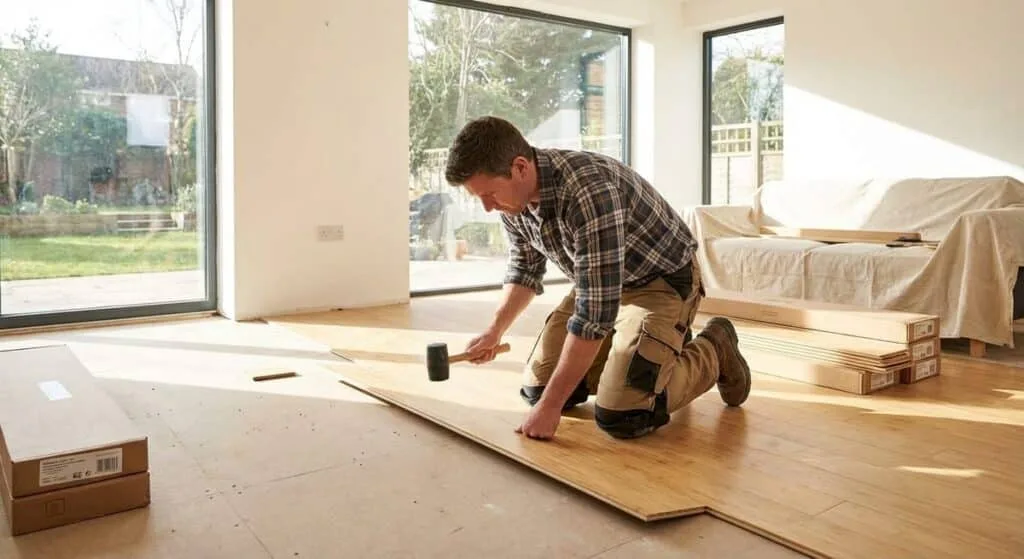
Focus on the three factors that matter most in North Atlanta’s climate: humidity resistance, termite prevention, and energy efficiency. Start material selection early, many sustainable options have longer lead times than traditional materials. Contact us for a free consultation to match eco-friendly materials to your budget and timeline.
Frequently asked questions
Are sustainable materials more affordable than traditional options?
They cost slightly more upfront but save money through lower energy bills and reduced maintenance. Many options like bamboo flooring and low-VOC paints price comparably once you factor in longevity.
Which sustainable materials hold up best to Georgia’s humidity and heat?
Bamboo, cork, recycled steel roofing, and cellulose insulation carry specific ratings for humid subtropical climates and outperform traditional options in moisture resistance and heat management.
What are the best basement materials for Georgia homes?
Polished concrete floors, cellulose insulation, recycled steel framing, and moisture-resistant drywall alternatives prevent mold and handle below-grade humidity effectively.
Do sustainable materials increase resale value in North Atlanta?
Yes. Homes with energy-efficient, eco-friendly materials command premium prices in Alpharetta, Roswell, and East Cobb, with buyers actively seeking these features.
How do I choose lower-maintenance materials for Atlanta’s climate?
Bamboo needs re-sealing every 5–7 years, recycled glass countertops every 2–3 years, and metal roofing only periodic inspections. Most sustainable materials’ natural properties reduce maintenance versus traditional options.

Planning a project?
Skip the guesswork, get real numbers.
Reading is great. A clear, itemized estimate is better. Tell us what you have in mind.