 Est. 2003
The best basement ceiling designs for Atlanta homes balance style, height clearance, and moisture resistance. Popular options include painted exposed joists to maximize ceiling height, drop ceilings for easy utility access, and mold-resistant drywall for a traditional finished look, plus wood plank ceilings to add warmth and premium texture.
Most Atlanta basements start with 7.5 to 8.5 feet of height, so every inch counts. Unlike other regions, you must factor in 70% humidity and seasonal moisture when selecting ceiling materials.
The main ceiling options
| Type | Cost/sq ft | Height loss | Best for |
|---|---|---|---|
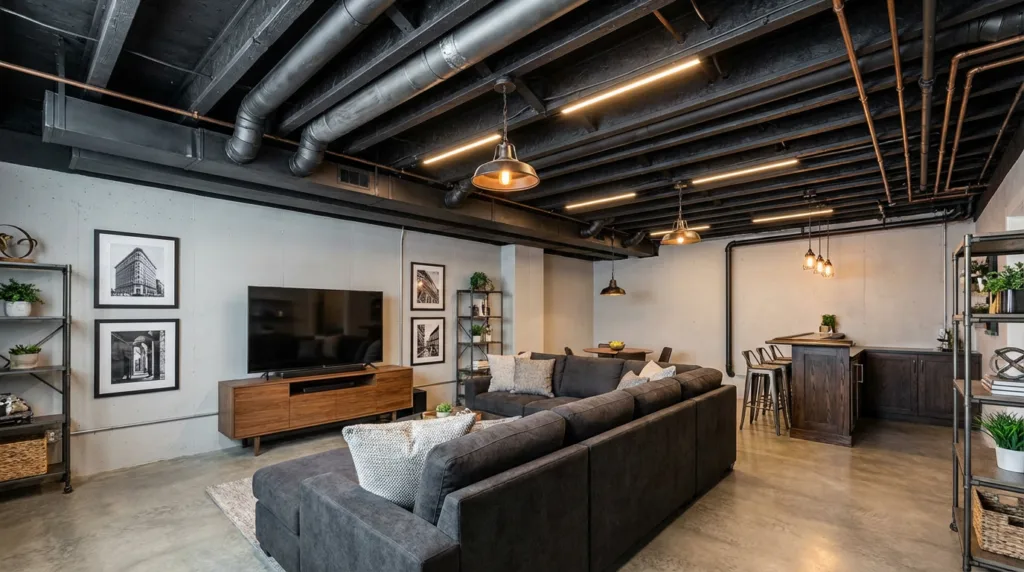
| Exposed/painted joists | $2–$4 | 0″ | Low ceilings, industrial look, tight budgets |
| Drop / suspended | $4–$7 | 3–4″ | Regular utility access, ceilings over 8 ft |
| Drywall | $6–$10 | 0.5–2″ | True finished-room appearance, sound dampening |
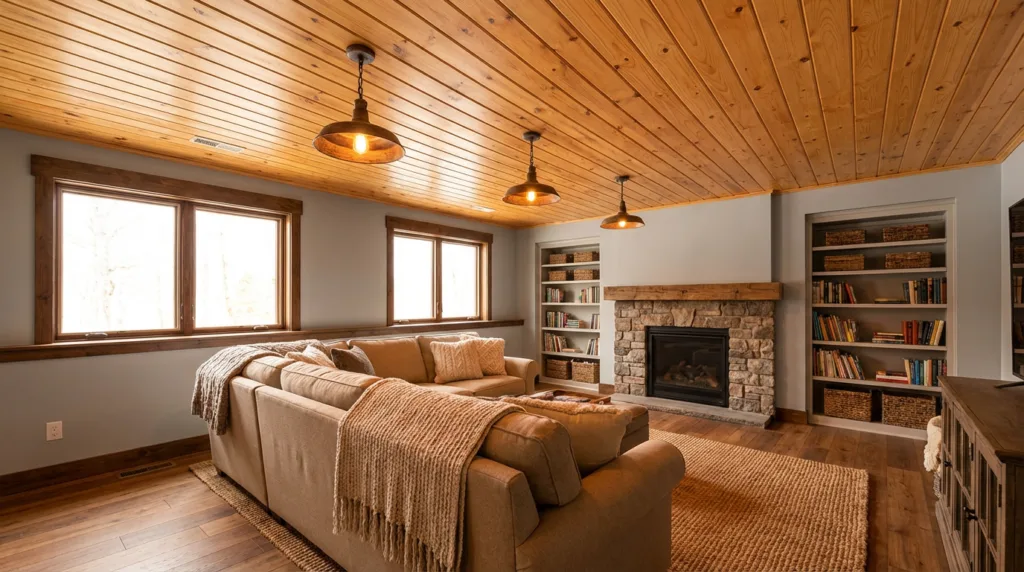
| Wood plank / slat | $8–$15+ | 1–2″ | Farmhouse/rustic warmth (needs climate control) |
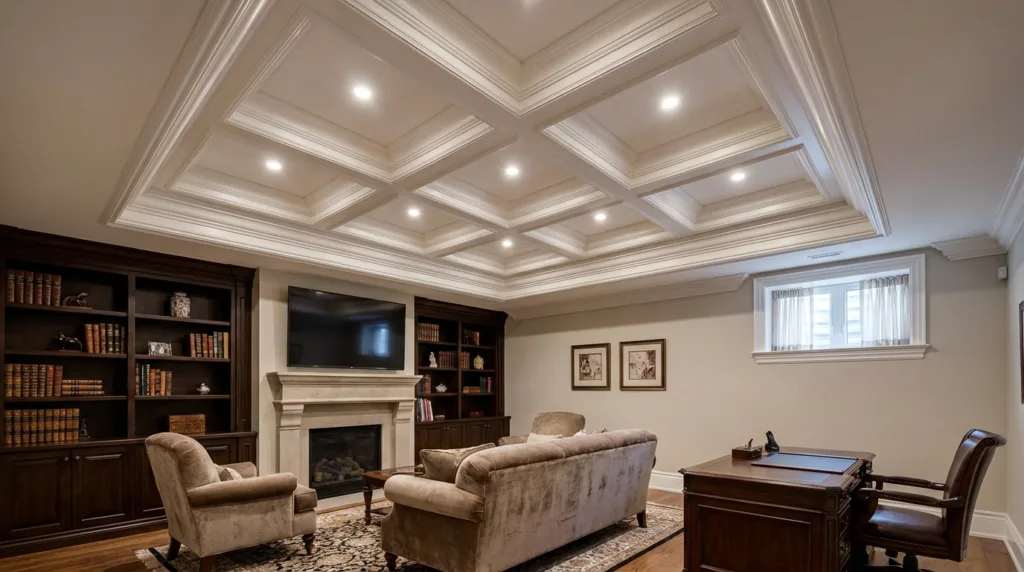
| Coffered | $20–$35 | 4–6″ | Luxury look, ceilings 8 ft+ |
Drop ceilings use mineral fiber, PVC/vinyl, metal, or acoustic tiles, in Atlanta, upgrade to moisture-resistant or vinyl-backed tiles to prevent yellowing and sagging. Exposed joists preserve every inch but require careful prep (mold remediation, organizing utility lines, stain-blocking primer). Drywall should be mold-resistant (purple board) for Atlanta. Wood plank needs 30–50% humidity year-round.
Choosing by ceiling height
Under 7.5 feet: painted exposed joists, or drywall between joists ($8–12/sq ft) to save 1.5–3 inches, complete all electrical and plumbing first. 7.5–8.5 feet: drop ceilings (easy access) or drywall (residential look with insulation). 8.5+ feet: statement designs like wood plank, beadboard, or coffered ceilings. Building codes require a 7-foot minimum clearance in finished basements.
Materials for Atlanta’s climate
Atlanta’s ~70% humidity is well above the ideal 50–60%. Install vapor barriers, maintain dehumidification at 45–50%, confirm drainage/sump pumps work before finishing, and choose moisture-resistant materials. Best mold-resistant options: metal systems (non-organic), PVC/vinyl, antimicrobial fiberglass tiles, cedar or pressure-treated wood, and paperless mold-resistant drywall. Avoid standard paper-faced drywall, untreated wood, and mineral fiber tiles in moisture-prone areas.
Installation planning
Measure floor-to-joist distances at multiple points, map mechanical obstructions, and check for moisture issues first. Finishing ceilings requires building permits in Atlanta ($200–500), plus electrical permits for new lighting, adding 1–2 weeks. Timelines: drop ceiling 2–4 days, drywall 5–7 days, exposed/painted 3–5 days, wood plank 4–7 days, coffered 1–2 weeks. We handle all permitting. Schedule a free assessment.
Frequently asked questions
What is the most cost-effective basement ceiling option?
Painted exposed joists are most budget-friendly but sacrifice sound control. For a traditional finished appearance, basic drop ceilings offer the best value with complete mechanical access and quick installation. Invest in appropriate moisture-resistant materials initially rather than paying twice for mold remediation.
How much ceiling height will I lose?
Exposed joists 0″, drywall between joists 0–1″, standard drywall 0.5–2″, drop ceiling 3–4″, wood plank 1–2″, coffered 4–6″.
Can I install recessed lighting with a drop ceiling?
Yes, use IC-rated recessed lights designed for drop ceilings (needing 6–8 inches clearance above) or surface-mount LED panels that replace standard tiles.
Which materials resist mold best in Atlanta?
Metal systems (no organic material), PVC/vinyl, antimicrobial fiberglass tiles, cedar/pressure-treated wood, and paperless mold-resistant drywall paired with active dehumidification at 45–50%.


Planning a project?
Skip the guesswork, get real numbers.
Reading is great. A clear, itemized estimate is better. Tell us what you have in mind.