 Est. 2003
You can handle home improvement stress by setting clear communication rules with your contractor and planning your budget upfront. Minimize daily disruptions with a temporary kitchen and a construction-free sanctuary space where your family can relax, proactive steps that keep anxiety low and routines intact.
About 78% of Atlanta homeowners report significant anxiety during home improvement projects. The good news: you can manage it with strategies for budget control, contractor communication, and keeping daily routines intact.
Why renovations cause stress
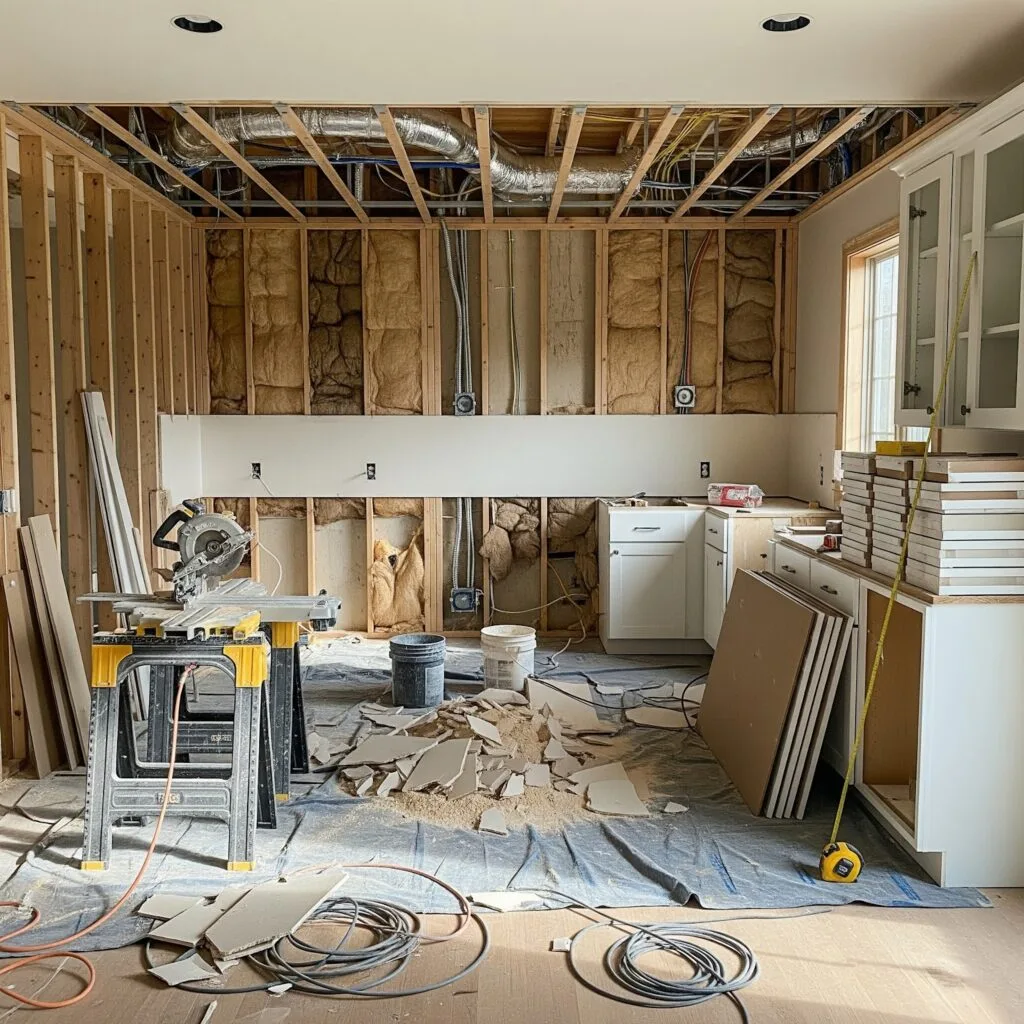
The biggest stressors: financial anxiety (Atlanta material costs rose 23% in two years), timeline delays (an 8-week kitchen can stretch to 12+), contractor communication breakdowns, and living disruptions, losing your kitchen, dust, and noise. When anxiety causes sleep disruption, strained relationships, or physical symptoms, it needs immediate attention.
Managing stress by phase
Planning: get at least three detailed quotes, define non-negotiables vs. nice-to-haves, and vet contractors thoroughly (Georgia licenses, references, permit expertise). During construction: establish daily communication protocols, designate one construction-free sanctuary space, schedule family check-ins, and use a “one decision per day” rule to fight decision fatigue. Mid-project crisis: take 24 hours before responding, reframe problems as decision points, and demand solutions (not just problems) with 2–3 options and cost/timeline implications.
Living through construction
Temporary kitchen ($200–$400 in your garage or dining room with microwave, kettle, mini-fridge, slow cooker) dramatically reduces meal-prep stress. Bathroom projects: stagger morning routines by 30 minutes per person; consider a gym membership for shower access. Protect belongings in sealed containers and cover furniture. Relocate temporarily if you’re without a bathroom for 3+ days, without a kitchen for 2+ weeks, or facing major dust near bedrooms.
Maintain children’s routines and construction-free times (most contractors honor “no jackhammering before 9 AM”), give pets safe spaces away from dust and noise, and create a remote-work sanctuary with noise-canceling headphones.

Communicating with your contractor
Communication failures generate more stress than any other factor. Red flags: 48+ hours to return calls, vague responses, defensive reactions, surprise decisions, updating only when you initiate. Healthy patterns: responses within 24 business hours, clear explanations with advance notice, open discussion of challenges, asking your preference, and proactive updates. Set protocols in your contract, daily progress updates, weekly walkthroughs, decision turnaround times, emergency definitions, and written change-order procedures.
Apply the 24-hour rule: if something bothers you for 24+ hours, address it directly, state the concern, express the impact, ask for solutions, and document the agreement.
After 5,000+ Atlanta projects, we’ve systematized stress prevention: daily communication, detailed timelines, dedicated project managers, end-of-day summary texts, proactive problem-solving, itemized estimates, a 1-year warranty, and living-situation support. Schedule a worry-free consultation.
Frequently asked questions
How long does renovation stress last?
Minor projects create 4–8 weeks of elevated stress; major renovations 3–6 months with peaks during demolition and mid-project. Homeowners with clear communication systems and sanctuary spaces report 40–60% lower stress.
Is renovation regret normal?
Absolutely, most often 3–4 weeks in, when demolition is done but rebuilding (6–8 weeks) leaves you in maximum chaos with minimal visible progress.
What if my contractor stresses me out?
For fixable problems, schedule an in-person meeting: state concerns, explain impacts, ask for solutions, document agreements. For fundamental problems (unresponsiveness, major quality or safety issues), document everything and consult a construction attorney.



Planning a project?
Skip the guesswork, get real numbers.
Reading is great. A clear, itemized estimate is better. Tell us what you have in mind.