 Est. 2003
The best energy-efficient upgrades to cut your costs are a high-efficiency heat pump and attic insulation upgraded to R-49, the two highest-ROI improvements for year-round utility savings. A smart thermostat and LED lighting deliver immediate monthly savings.
Metro Atlanta homeowners spend $2,100–$2,800 annually on energy, with 60% concentrated in four months of cooling season. Strategic upgrades can cut those bills by 30–50% while improving comfort. This guide focuses on what works in Georgia’s Climate Zone 3.
Why invest now
Georgia’s Climate Zone 3 requires R-49 attic insulation (exceeding the R-38 standard in moderate climates). The average Georgia Power customer pays 13.2 cents per kWh, with summer bills regularly exceeding $250–300. The Inflation Reduction Act extended federal tax credits through 2032: up to $2,000 for heat pumps, $1,200/year for insulation and air sealing, $600/year for windows. Combined with Georgia Power rebates, these reduce your net investment by 25–40%.
Smart prioritization
Quick wins (12–24 month payback): smart thermostat (10–15% cooling reduction), full LED conversion (75–80% lighting reduction), basic weatherization. Mid-range: R-49 insulation (15–25% cooling reduction), professional duct sealing (recaptures 20–30% of lost air), tankless water heaters. Major systems: 16–18 SEER heat pump (40–50% HVAC reduction, 5–8 year payback), energy-efficient windows, solar.
Start here by home age: pre-1980 homes → insulation and weatherization; 1980–2000 → HVAC replacement and duct sealing; post-2000 → quick wins and technology upgrades.
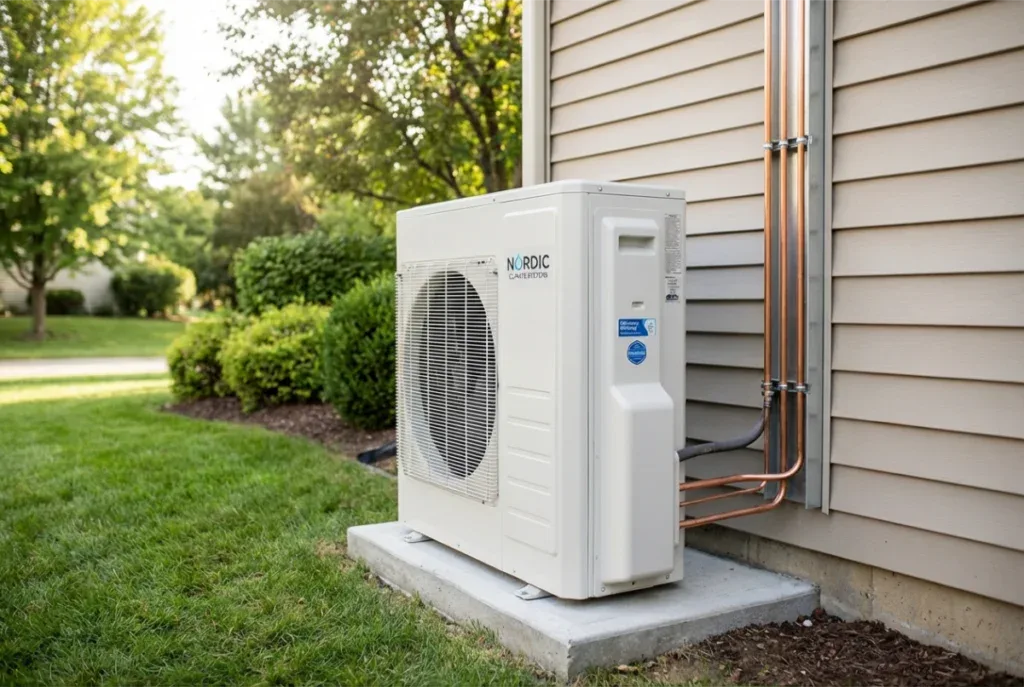
Top 12 upgrades
- 1 Heat pump HVAC, 50% less energy than forced-air; target SEER 16–18+, HSPF 9.0+, Energy Star; saves $800–1,400/yr
- 2 Attic insulation to R-49, attics hit 140–150°F; blown-in fiberglass, cellulose, or closed-cell foam; saves $250–450/yr
- 3 Smart thermostat, learning algorithms, geofencing, multi-room sensors; $50 Georgia Power rebate; 6–18 month payback
- 4 Weatherization & duct sealing, blower-door testing + mastic sealing (never cloth duct tape); saves $250–500/yr
- 5 Energy-efficient windows, U-factor ≤0.30, SHGC ≤0.25; replace south/west exposures first
- 6 Tankless water heater, 20–35% water-heating reduction; 20+ year lifespan
- 7 Energy Star appliances, 10–50% less energy; induction cooktops 70–80% more efficient than resistance
- 8 Full LED conversion, 75–80% less energy, 15–25× longer life; 1–2 year payback (the best DIY project)
- 9 Crawl space encapsulation, 10–20 mil vapor barrier, sealed vents, dehumidification at 45–55%
- 10 Solar panels, 6–12 kW systems, 30% federal credit, 8–12 year payback
- 11 Cool roof coatings, reduce roof temps 50–60°F, cut cooling 7–15%
- 12 Whole-home dehumidification, maintain 40–50% humidity, set thermostat 2–3°F higher; 70–100 pint capacity

DIY vs. professional
LED lighting, smart thermostats, and basic air sealing are DIY-friendly. Always hire licensed professionals for HVAC replacement, electrical panel upgrades, spray foam insulation, duct sealing, and solar. Contact Artistic Construction for a free energy consultation and remodeling assessment.

Frequently asked questions
Which upgrade gives the best ROI in Atlanta?
Heat pump HVAC replacement and R-49 insulation, with 5–8 year payback. Heat pumps excel in Georgia’s mild winters while dramatically reducing cooling costs.
How much can I save on my Georgia Power bill?
Comprehensive upgrades reduce bills by 30–50%, roughly $600–1,200 annually for most metro Atlanta homes.
Do energy upgrades increase home value?
Yes, by 2–4% in metro Atlanta’s competitive market. Buyers value recent HVAC replacement, proper attic insulation, and energy-efficient windows.
Can I finance energy upgrades?
Yes, Georgia Power EnergyWise financing offers low-interest loans, and FHA PowerSaver loans provide government-backed financing.
How long do these upgrades last?
LED bulbs 15–25 years, heat pumps 15–20 years, solar panels 25–30 years. Properly installed insulation has an indefinite lifespan.

Planning a project?
Skip the guesswork, get real numbers.
Reading is great. A clear, itemized estimate is better. Tell us what you have in mind.