 Est. 2003
Stop guessing about basement flooring. Over 5,000+ basement projects in Metro Atlanta, we’ve learned exactly which materials deliver the best value below grade, where moisture, temperature swings, and humidity can ruin the wrong material fast.
| Flooring type | Cost range | Moisture resistance | Lifespan |
|---|---|---|---|
| Luxury Vinyl Plank | $4–8/sq ft | Excellent | 10–15 years |
| Epoxy coatings | $6–12/sq ft | Outstanding | 15–20 years |
| Porcelain tile | $8–15/sq ft | Outstanding | 20+ years |
| Carpet tiles | $3–6/sq ft | Good | 7–10 years |
| Engineered hardwood | $8–15/sq ft | Fair* | 15–25 years |
*Requires strict moisture control
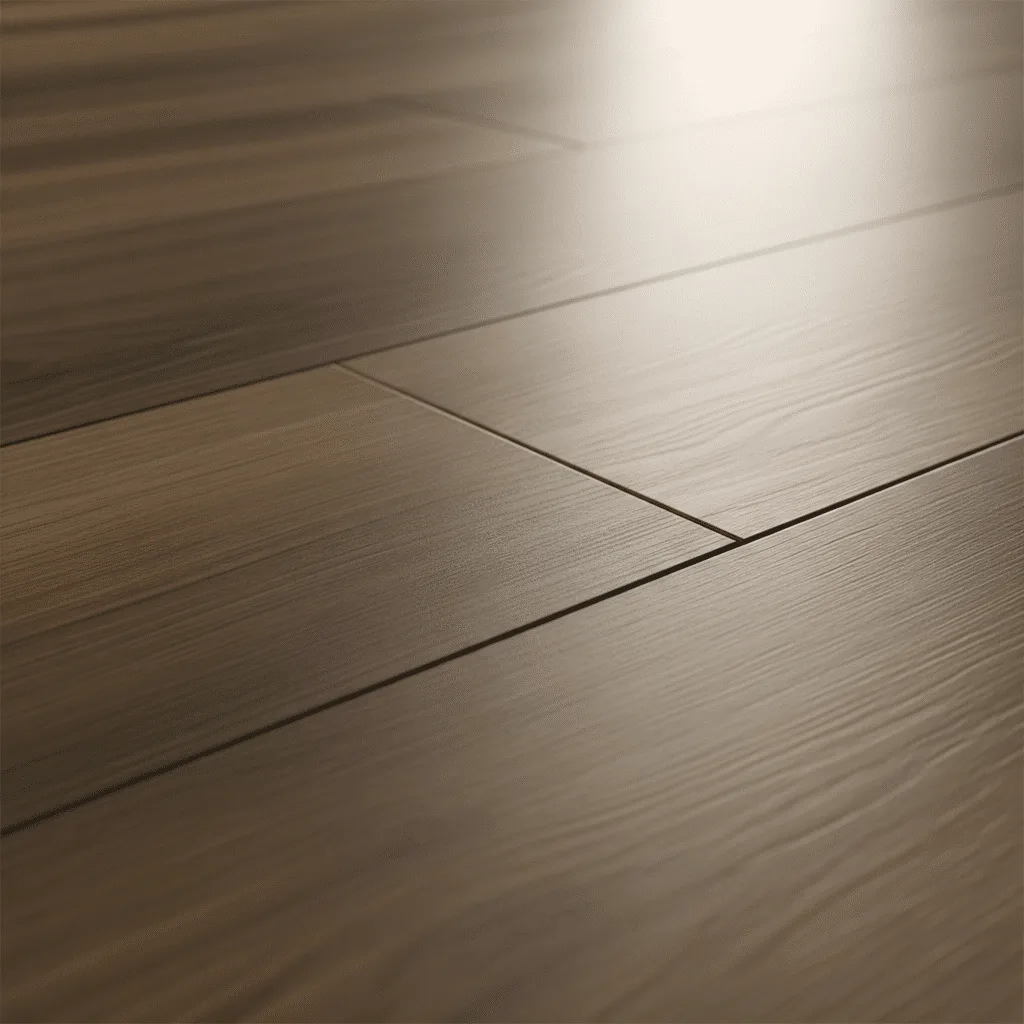
The top 5 choices
1. Luxury Vinyl Plank, we install LVP in ~60% of basement projects. It looks like real wood or stone, has a 100% waterproof core (WPC or SPC), click-lock installation that handles foundation movement, and replaceable planks. Specs that matter: 12-mil+ wear layer, floating installation over glue-down, $4–8/sq ft. A 500 sq ft basement runs $3,250–5,000 installed.
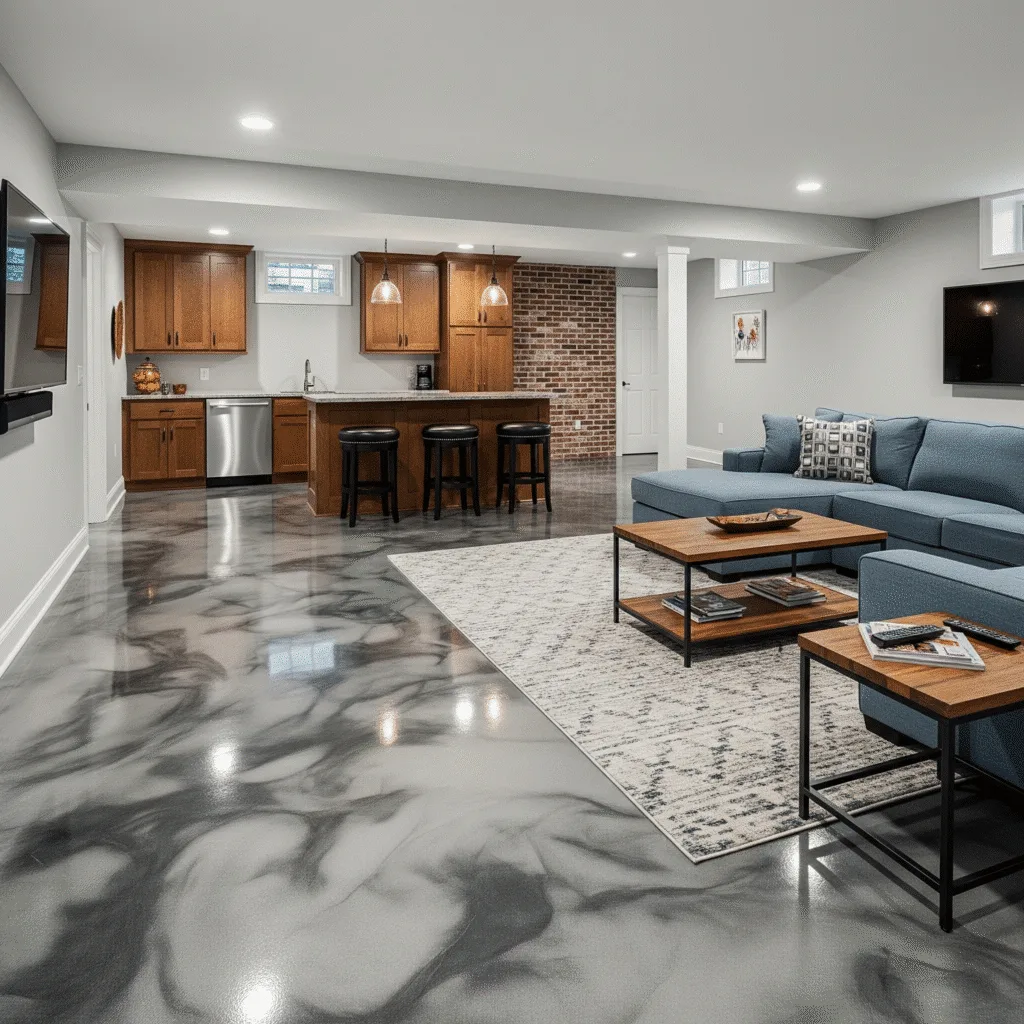
2. Epoxy coatings, clean, modern, low-maintenance. Options: water-based epoxy ($3–6), 100% solids epoxy ($6–10), polyaspartic ($8–12, fast-curing, UV-stable). Requires diamond grinding and multiple coats, a professional job that lasts 15–20 years. 3. Porcelain tile, bulletproof for areas that might see water, with <0.5% absorption, chemical resistance, and 20+ year performance (needs waterproof membranes and epoxy grout).
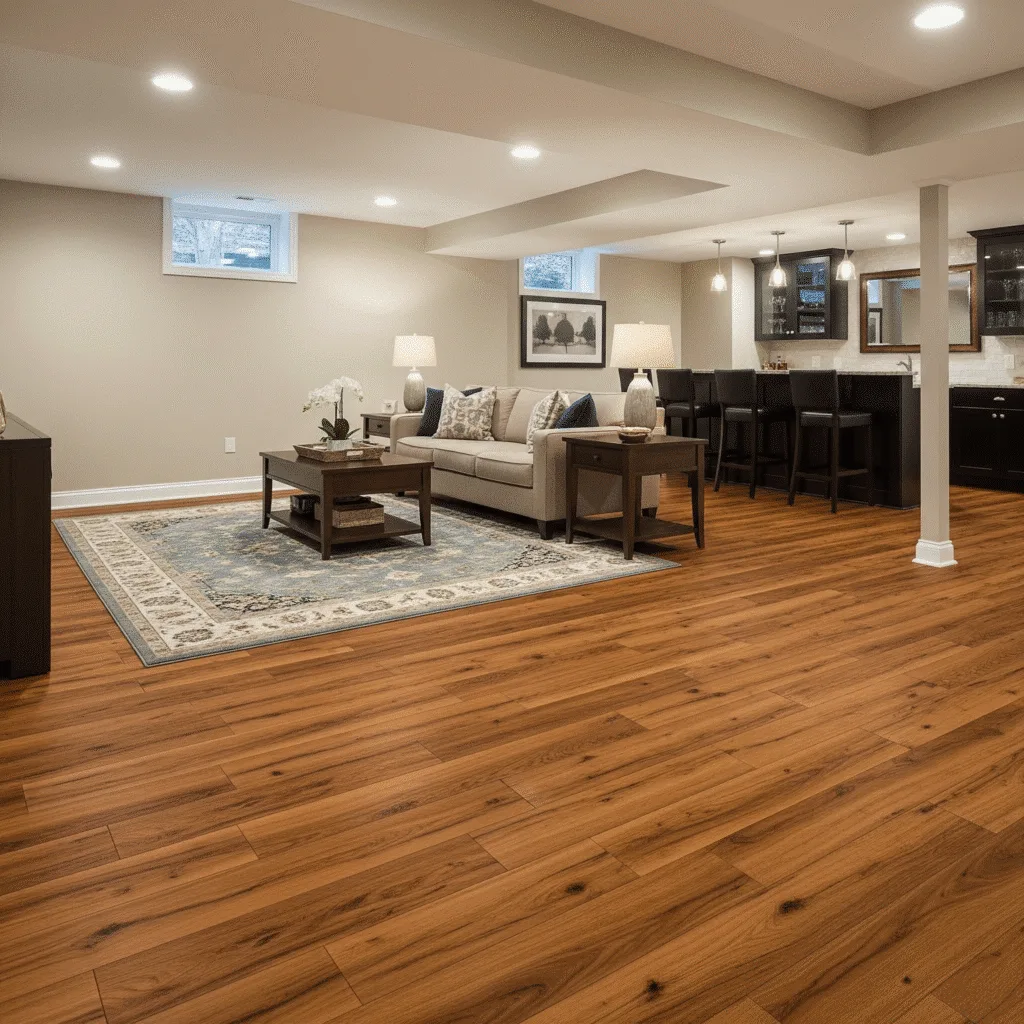
4. Carpet tiles, the comfort champion for family spaces, with moisture-resistant backing, individual replacement, and quick drying. 5. Engineered hardwood, stunning but demanding: requires concrete humidity below 65% year-round, HVAC running 24/7 (65–75°F, 40–60% humidity), and comprehensive moisture barriers.
Common problems
Most failures trace to skipped moisture testing, beautiful floors ruined within months because the concrete wasn’t evaluated. Others come from poor installation (buckling, gaps) or wrong material choices (solid hardwood in a damp basement, glue-down LVP over high-moisture concrete). Start with a free consultation including ASTM-standard moisture testing.
Frequently asked questions
What is the best flooring for a concrete basement?
Luxury Vinyl Plank, the best all-around choice for moisture resistance, durability, appearance, and cost, installed in about 60% of our projects. Epoxy and porcelain are also outstanding for maximum durability or modern aesthetics.
What is the healthiest basement flooring?
Inorganic, waterproof materials that resist mold, porcelain tile (absorbs <0.5% water) and epoxy coatings (seamless, non-porous) are excellent and easy to disinfect.
Vinyl or laminate for a basement?
Vinyl is significantly better, LVP has a 100% waterproof core, while laminate’s fiberboard core can swell, warp, and be permanently damaged by water.
What flooring is not recommended for basements?
Solid hardwood (susceptible to warping and rot) and traditional wall-to-wall carpet with absorbent padding (traps moisture, leading to mold).
Most cost-effective basement flooring?
Carpet tiles at $3–6/sq ft (~$1,500–2,500 for a 500 sq ft basement), with the practical advantage of replacing individual tiles.

Planning a project?
Skip the guesswork, get real numbers.
Reading is great. A clear, itemized estimate is better. Tell us what you have in mind.