 Est. 2003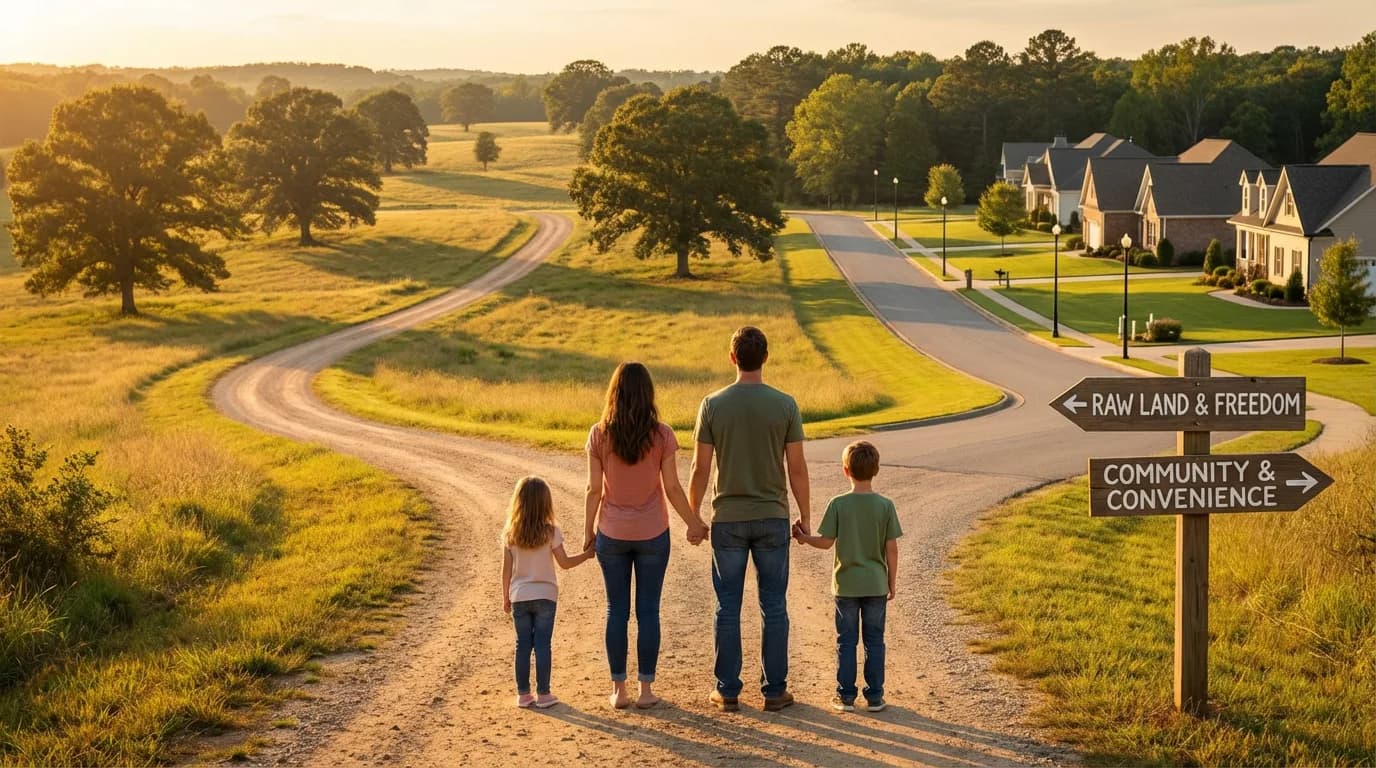
Building on your own property gives you total design freedom and maximum privacy, but you must handle infrastructure like wells and septic over a 12–18 month timeline. Building in a subdivision offers a faster 6–9 month process with turnkey utilities and community amenities, but you must adhere to HOA rules and architectural guidelines.
This decision affects your budget, construction timeline, daily lifestyle, and long-term property value. Neither choice is inherently better, they serve different priorities.
| Factor | Your own property (raw land) | Subdivision community |
|---|---|---|
| Privacy & space | High, 2–10+ acres with natural buffers | Limited, 0.25–1 acre lots |
| Design freedom | Complete, no architectural restrictions | Moderate, architectural review required |
| Timeline | 12–18 months from land purchase | 6–9 months from lot selection |
| Infrastructure costs | Upfront, wells, septic, utilities | Included in lot price |
| Monthly fees | None ongoing | HOA fees apply |
| Amenities | What you build yourself | Pools, clubhouses, trails included |
| Builder choice | Any licensed contractor | May be restricted to approved builders |
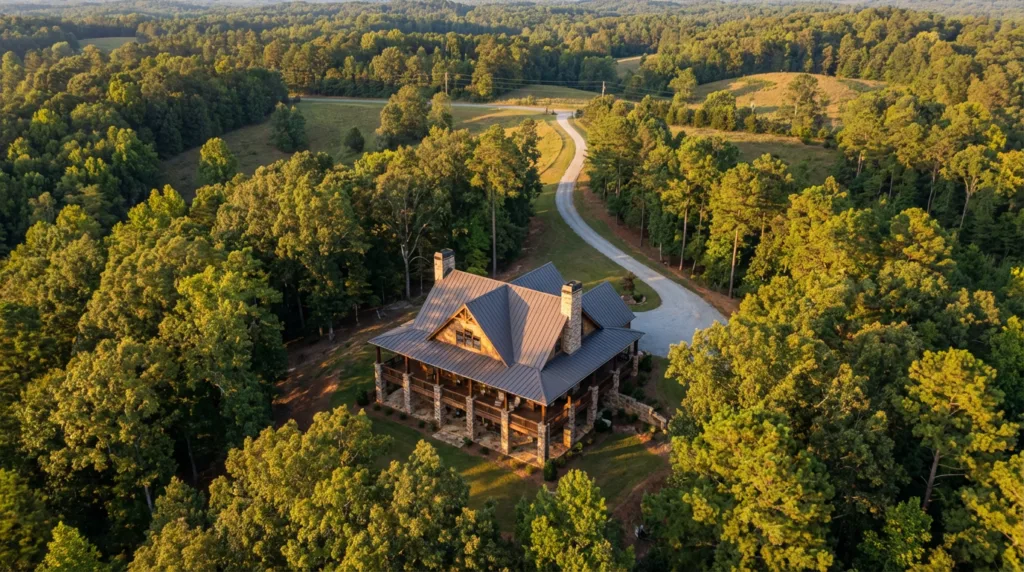
Building on your own property
Raw land involves two distinct investments: land acquisition and infrastructure development. Land by county: Cherokee (Woodstock, Canton) offers moderate prices; Forsyth sees premiums near Lake Lanier and top schools; North Fulton (Milton, Alpharetta) commands the highest; Paulding is most affordable. Infrastructure: wells reach 150–400 feet; Georgia’s clay soil requires advanced septic drain fields (600–900 sq ft for three-bedroom homes); utility line extensions, French drains, and grading add up.
Advantages: acreage and privacy, complete architectural freedom, natural surroundings, builder flexibility, future expansion (workshops, pools, guest cottages), and strong appreciation for well-chosen 2–5 acre locations. Complexities: you coordinate well drillers, septic contractors, and utilities; sequencing matters (septic permits need soil tests, wells precede septic); environmental buffers (25–50 ft along state waters); and longer timelines.
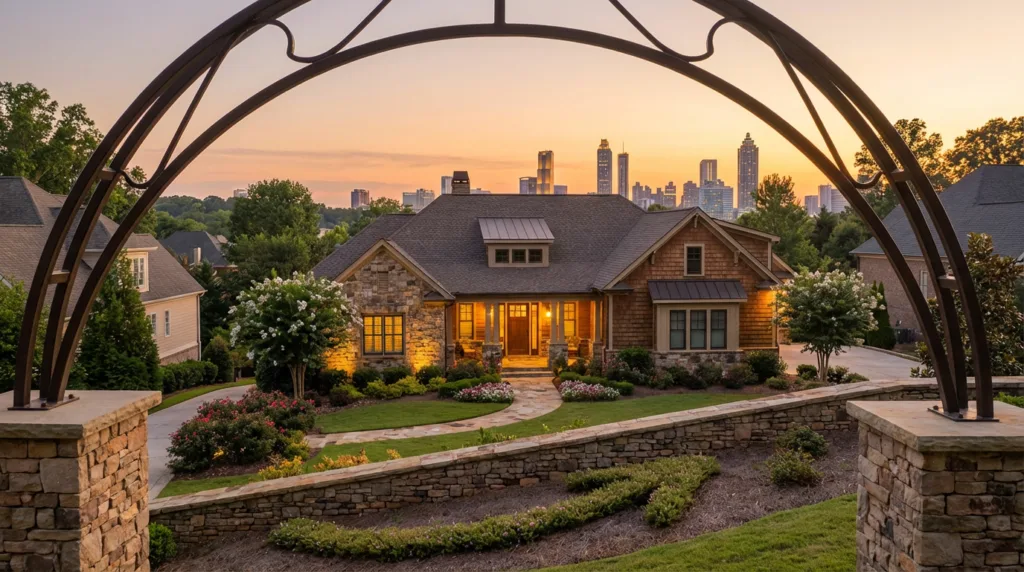
Building in a subdivision
Advantages: turnkey infrastructure (roads, utilities, water, sewer, storm drainage all ready), shorter 6–9 month timelines, resort-style amenities, established neighborhoods near quality schools, community connections, and easier financing (lenders view finished lots as lower risk). Disadvantages: ongoing HOA fees that increase over time, architectural restrictions on colors/materials/styles, privacy limitations on closer lots, ongoing HOA rules with fines for violations, and limited expansion.
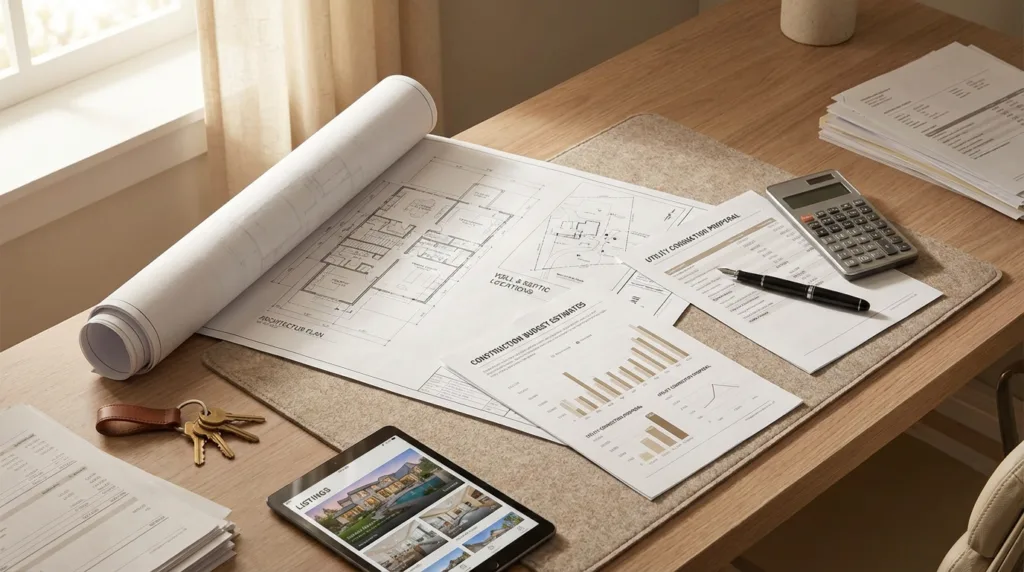
Financing differences
Raw land loans are higher risk, expect larger down payments and requirements for site plans, utility availability, approved septic permits, and soil tests; many lenders cap financing at a percentage of total project costs. Subdivision loans get more favorable terms, lower down payments, and construction-to-permanent products that consolidate into a single closing. Get pre-qualified including land/lot, construction, and infrastructure before shopping. Contact Artistic Construction for guidance.
Frequently asked questions
Can I build a workshop later on subdivision property?
Most subdivisions restrict outbuildings through covenants requiring committee approval for size, placement, and materials. Raw land allows outbuildings subject only to county setbacks.
What if my well runs dry after construction?
Properly sited wells rarely run dry in Metro Atlanta. Most drillers provide one-year warranties; solutions include deepening the well, drilling a supplemental well, or adding storage.
Do architectural committees reject custom home plans?
Rarely outright, but they commonly require revisions for materials, colors, or roof styles not matching community character. Experienced builders reduce revision cycles; reviews take 2–3 weeks.
Which option has better resale value?
Both appreciate well when executed well. Subdivisions sell faster due to comparable sales; raw-land homes (2–5 acres) command privacy premiums but attract a smaller buyer pool. Location and quality matter more than lot type.


Planning a project?
Skip the guesswork, get real numbers.
Reading is great. A clear, itemized estimate is better. Tell us what you have in mind.