 Est. 2003
Commercial concrete slabs require 28 days to reach full design strength of 100%, though light use is typically safe after 7 days when the concrete achieves approximately 70% strength. Curing time depends on temperature, humidity, slab thickness, and proper moisture retention methods during the hydration process.
When planning a substantial concrete project, a detached garage, workshop, or barn foundation, understanding curing time is critical. You can walk on the surface within 24–48 hours and park standard vehicles after 7 days, but full strength takes 28 days. Understanding this timeline helps you coordinate contractors, schedule phases, and avoid costly mistakes.
What is concrete curing and why your timeline matters
Concrete cure vs. dry: the critical difference
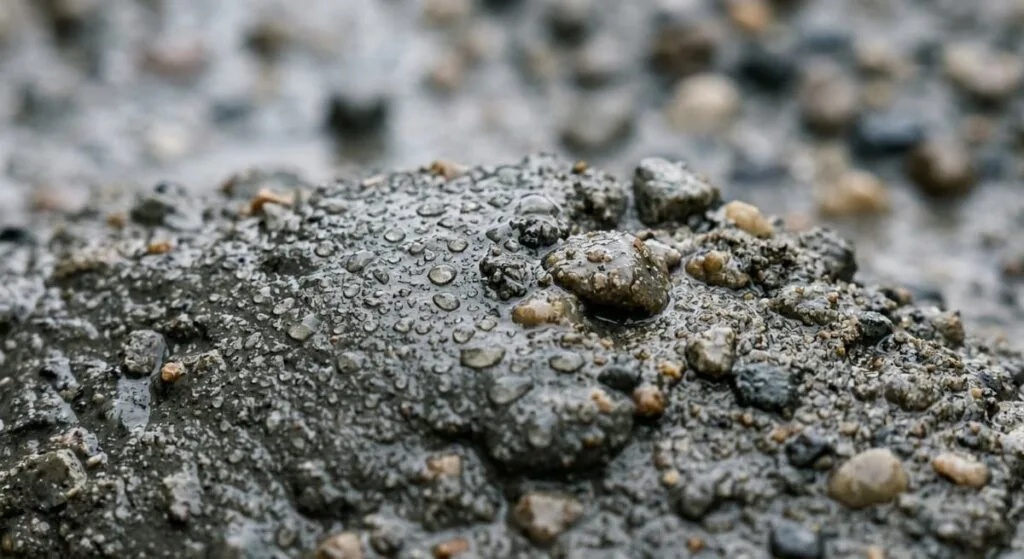
Concrete curing isn’t simply drying, it’s a chemical reaction called hydration where water and cement bond to create the crystalline structure that gives concrete its strength. This requires moisture to continue, not evaporation. When concrete dries too quickly, hydration stops prematurely, producing weaker concrete prone to cracking and surface damage.
The hydration process generates heat as calcium silicate compounds react with water to form calcium silicate hydrate crystals, the primary component giving concrete its compressive strength. This reaction continues for weeks, creating progressively denser bonds.
Why rushing curing time compromises your investment
At 7 days, concrete reaches about 70% of design strength, adequate for light use but not maximum loads. By 28 days, hydration delivers essentially 100% of intended strength. Loading concrete prematurely causes microscopic cracking that permanently weakens the structure; testing shows concrete loaded to capacity at 7 days instead of 28 can experience up to 30% reduction in long-term durability.
When you can use your slab
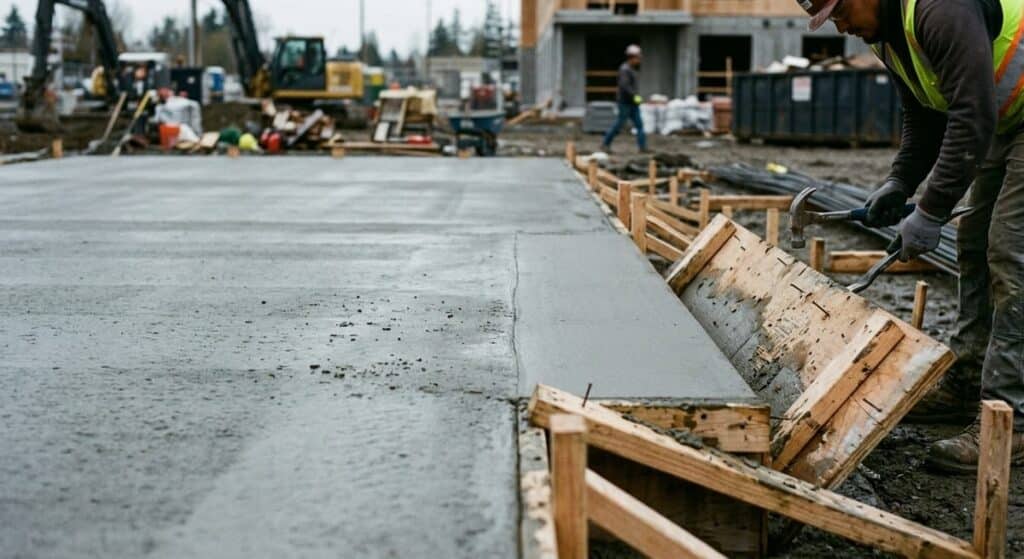
Initial set and form removal (0–48 hours): within 24 hours concrete hardens enough to support its own weight and light foot traffic. Forms come off around 24–48 hours. Protect fresh concrete from rain, direct sun, and temperature extremes; it’s vulnerable to plastic shrinkage cracking from rapid surface evaporation.
Early strength (3–7 days): by day 3 the slab handles light equipment; by day 7 it reaches the 70% threshold, safe for standard vehicles and moderate traffic.
| Activity | Safe timeline | Load-bearing notes |
|---|---|---|
| Light foot traffic | 24–48 hours | Soft-soled shoes; avoid edges |
| Material storage (light) | 3–5 days | Distribute weight evenly |
| Standard vehicles | 7 days | Cars, pickups, SUVs only |
| Light equipment | 7–10 days | Avoid repeated concentrated loads |
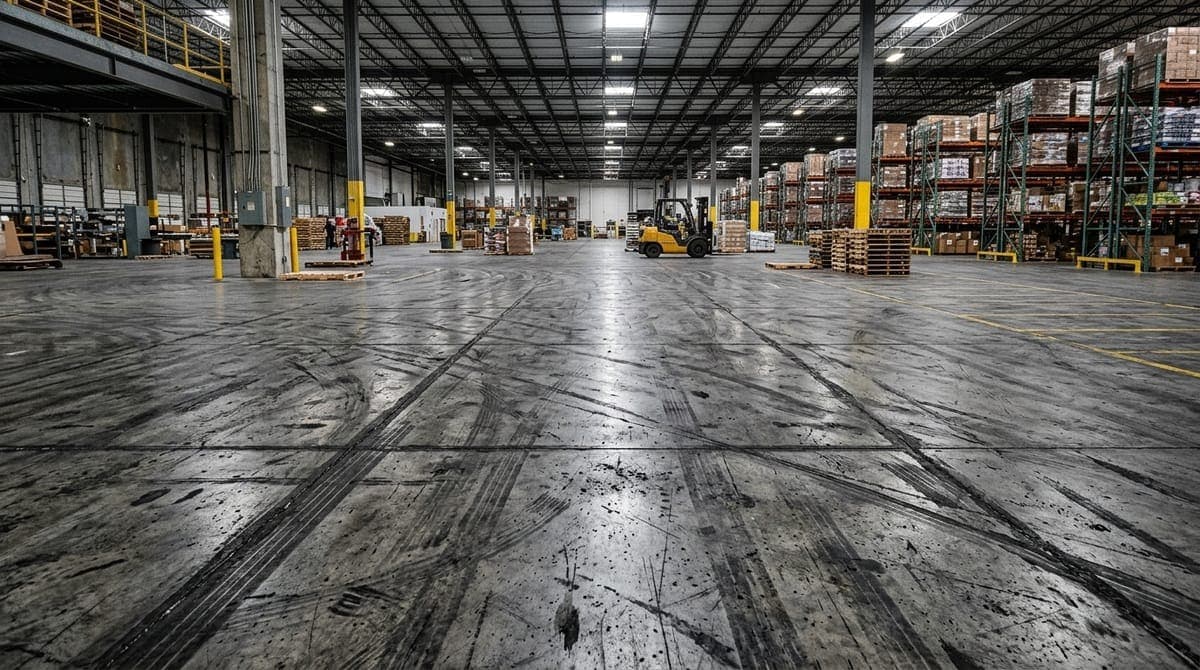
| Heavy trucks/equipment | 14 days minimum | Better to wait full 28 days |
| Full design capacity | 28 days | Maximum loads now safe |
Progressive strength (7–28 days): hydration slows but continues, developing durability for sustained heavy use. Maximum strength and sealing (28–90 days): the slab reaches its design rating (3,000–4,000 PSI residential, 4,000–5,000+ PSI commercial). Most contractors recommend sealing between 30–60 days; verify internal moisture is below 4–5% before applying coatings.
How Georgia’s climate affects curing time
Atlanta’s humidity advantage: average humidity around 65% year-round helps maintain hydration, a real advantage over arid climates, but you still need active curing methods. Summer (June–August): mid-90s temperatures accelerate evaporation; surface temps can exceed 130°F, so contractors use reflective white blankets or shade. Winter (Dec–Feb): below 40°F hydration slows; below 32°F water can freeze and cause permanent damage.
The ideal months for slab installation in Cherokee, Cobb, and North Fulton are September–November and March–May, when temperatures and humidity stay favorable.
Factors that affect curing time
| Factor | Impact | Recommendation |
|---|---|---|
| Slab thickness | Thicker retains moisture longer but cures slower through depth | 6″+ slabs need careful moisture monitoring |
| Mix design | High-early mixes reach 70% in 3–5 days vs. 7 | Type III for speed, Type II for mass pours |
| Ambient temperature | Ideal 50–85°F; hydration halves per 10°F below 70°F | Protect above 90°F or below 50°F |
| Humidity | Atlanta’s 65% aids curing but isn’t enough alone | Still mist, blanket, or use compounds |
| Curing method | Water curing best; compounds effective | Match to project and conditions |
| Load requirements | Heavier loads demand full 28-day cure | Commercial must reach 100% strength |
Quality checks during curing
- ✓ Moisture retention: surface should stay visibly damp for at least the first 7 days
- ✓ Weather protection: tarps, insulated blankets, or shade during rain, sun, and temperature extremes
- ✓ Traffic restrictions: no vehicles, equipment, or heavy materials before milestones
- ✓ Professional curing methods: compounds, misting, or wet blankets applied within hours of finishing
- ✓ Temperature monitoring: internal temps shouldn’t exceed 160°F during initial set
Properly installed and maintained commercial-grade slabs routinely last 30–50 years. Schedule a free consultation for a custom timeline based on your application.
Frequently asked questions
How long before I can walk on new concrete?
Light foot traffic with soft-soled shoes is safe after 24–48 hours once initial set is complete. Avoid edges and corners, and keep heavy objects off the surface.
When can I drive on concrete after pouring?
Standard passenger vehicles are safe after 7 days when concrete reaches about 70% strength. Wait the full 28 days for heavy trucks, commercial vehicles, or equipment.
What happens if it rains during curing?
Light rain after the initial 24-hour set is beneficial, it adds moisture supporting hydration. Heavy rainfall in the first few hours requires protective covering to prevent surface damage and cement washout.
Can accelerated curing shorten the 28-day timeline?
Accelerators can reach 70% strength in 3–5 days instead of 7, but achieving full 100% design strength still requires about 28 days.
Planning a project?
Skip the guesswork, get real numbers.
Reading is great. A clear, itemized estimate is better. Tell us what you have in mind.