 Est. 2003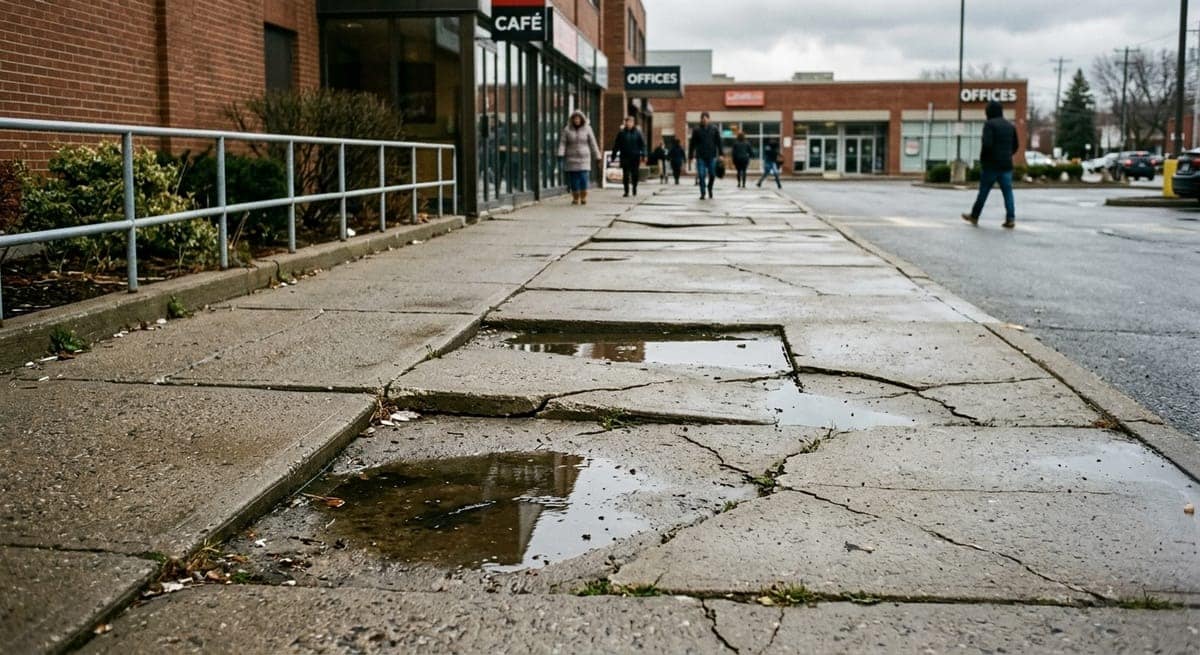
Uneven concrete slabs are typically caused by soil settlement, erosion, or clay expansion beneath the surface. Professional polyurethane foam injection lifts and levels settled concrete by filling voids and raising slabs back to their original position, usually within one day at 50–70% less cost than replacement.
Is your commercial concrete creating dangerous trip hazards for customers or employees? Settled concrete slabs expose your property to serious liability risks and progressive structural damage. Most uneven concrete problems can be fixed permanently in 1–2 days without the disruption and expense of full replacement.
Artistic Construction specializes in commercial and residential concrete leveling across Metro Atlanta, bringing 22 years of construction expertise. We use advanced polyurethane foam injection to lift and level sunken slabs, providing permanent solutions that are ready to use in 15 minutes.
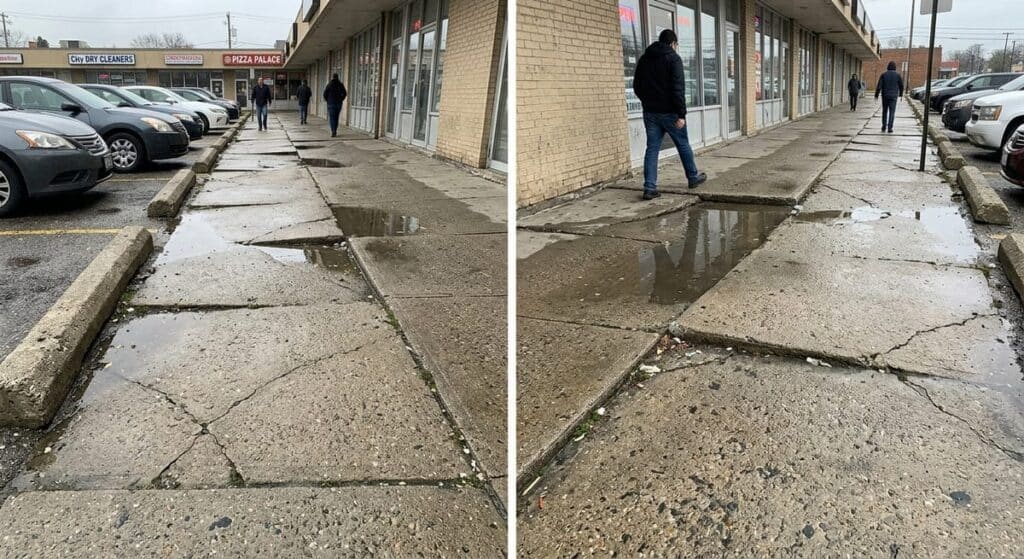
Commercial concrete safety hazards you can’t ignore
Warning signs requiring immediate attention
- ✓ Separation gaps wider than 1/4 inch indicate soil erosion and meet ADA’s threshold for trip-hazard removal
- ✓ Pooling water after rain means improper drainage that erodes supporting soil
- ✓ Radiating cracks from corners show the slab is under stress from uneven support
- ✓ Height differences of 1/4 inch or more create trip hazards under ADA and OSHA standards
- ✓ Rocking or hollow sounds when walking indicate voids beneath the surface
The hidden costs of delaying repair
Liability exposure tops the list, a single slip-and-fall lawsuit can mean significant legal fees, settlements, and higher premiums. Progressive structural damage compounds as settlement spreads to adjacent slabs and foundations. Property value declines as buyers see uneven concrete as deferred maintenance. Accelerated deterioration occurs as uneven slabs collect water that freeze-thaw cycles turn into spalling and cracking.
North Georgia’s red clay soil makes settlement particularly common: it expands when saturated during spring rains, then contracts during summer drought, creating voids beneath concrete.
How we fix uneven concrete without replacement
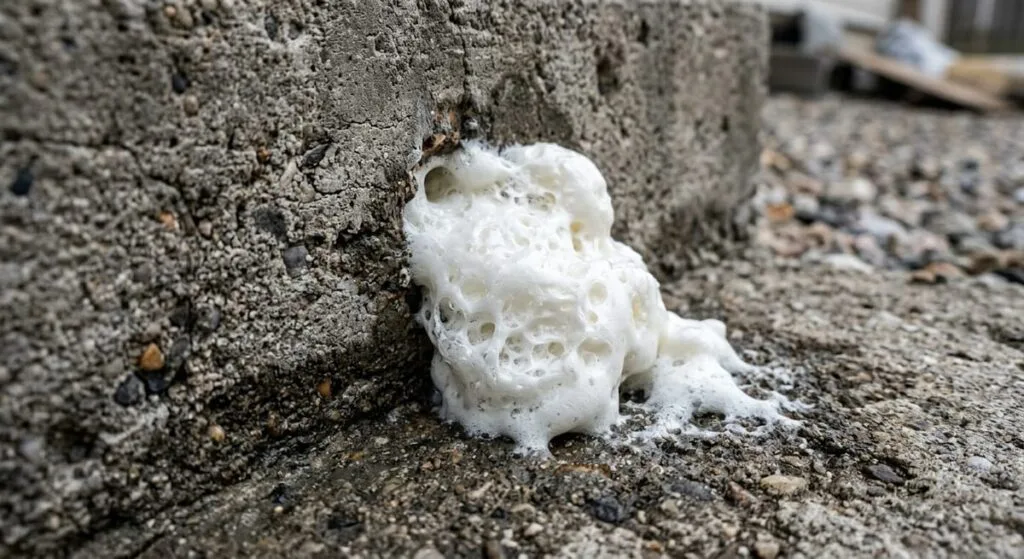
Polyurethane foam injection vs. traditional mudjacking
Polyurethane foam injection (polyjacking) fills voids beneath your concrete and lifts it back to position. We drill penny-sized holes, insert injection ports, then pump expanding foam beneath the slab. Unlike mudjacking’s heavy sand-cement slurry, the foam is lightweight, waterproof, and won’t wash out or decompose. It expands in seconds, cures in about 15 minutes, and allows immediate traffic.
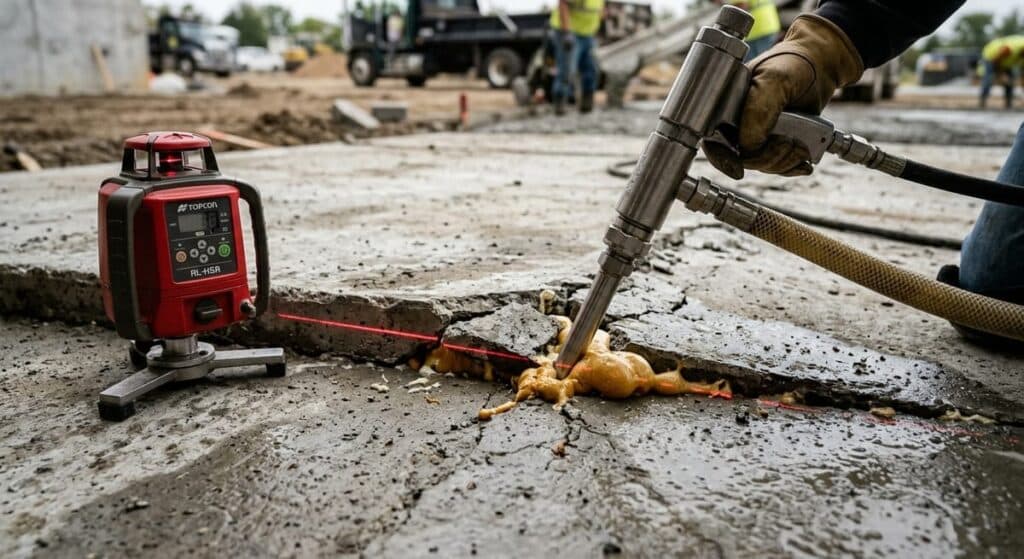
Our proven repair process
- Professional inspection and measurement, we assess severity, identify the cause, and measure elevation differences with laser levels. Free, with a written no-obligation estimate.
- Strategic hole placement, 5/8-inch holes in a grid pattern, placed in low-visibility areas along joints, corners, or edges.
- Polyurethane foam injection, foam pumped in controlled stages while laser levels monitor lift in real time; concrete rises within 5–15 seconds per port.
- Port sealing and cleanup, ports removed, holes sealed with color-matched, polymer-modified patch. Ready for full traffic immediately.
Most residential repairs take 4–6 hours; commercial projects complete in 1–2 days. For businesses that can’t afford daytime disruption, we schedule after hours or weekends.
Choosing the best leveling method
| Choose foam leveling when: | Choose replacement when: |
|---|---|
| Slab is structurally sound | Severely cracked throughout |
| Settlement ranges 1/2″ to 6″ | Concrete crumbling or spalling extensively |
| Need surface usable immediately | Planning to change slab size/configuration |
| Operations can’t pause | Concrete 40+ years old with multiple failures |
About 80% of settled concrete we evaluate is repairable with foam injection. Foam repairs complete in hours to two days with immediate usability; replacement requires demolition, haul-away, site prep, and a 7-day cure (10 days minimum to normal use).
Why North Georgia concrete settles
Georgia’s red clay soil absorbs water and swells in wet seasons, then shrinks during drought. Seasonal weather, heavy spring rain followed by hot dry summers, cycles soil between saturation and desiccation. Tree root growth in wooded suburbs like Alpharetta, Roswell, and Milton reaches 30–40 feet from the trunk. Poor initial soil compaction in newer developments leaves loose fill that compresses under the concrete’s weight. Foam injection fills voids regardless of cause, stabilizes loose soil, and creates a waterproof barrier preventing future washout.
Frequently asked questions
Can uneven concrete be fixed without replacement?
Yes, in about 80% of cases. Polyurethane foam injection lifts and levels settled concrete by filling voids underneath and raising the slab back to its original position.
How long does concrete slab lifting take?
Most residential projects complete in 4–6 hours; larger commercial projects take 1–2 days. The concrete is usable within 15 minutes after repair.
How long does polyurethane foam leveling last?
10–15+ years or longer. Unlike organic materials that decompose, the foam is inert and waterproof, it won’t wash out, compress further, or degrade.
Is the foam safe for the environment and groundwater?
Yes. Once cured it is environmentally inert and poses no threat to groundwater or soil; the material is NSF-certified for contact with potable water systems.
What’s the difference between slabjacking and mudjacking?
Slabjacking (polyjacking) uses lightweight foam that expands to fill voids and lift concrete. Mudjacking pumps heavy sand-cement slurry. Foam is lighter, cures faster (15 minutes vs. days), won’t wash out, and offers more precise control.

Planning a project?
Skip the guesswork, get real numbers.
Reading is great. A clear, itemized estimate is better. Tell us what you have in mind.